




When design elevates craftsmanship
In Besançon, the historical cradle of French watchmaking, a fascinating dialogue unfolds between rigor, technique, and creativity. This dialogue takes shape within the SupMicrotech school, a leading institution in the training of future cutting-edge microtechnology engineers.
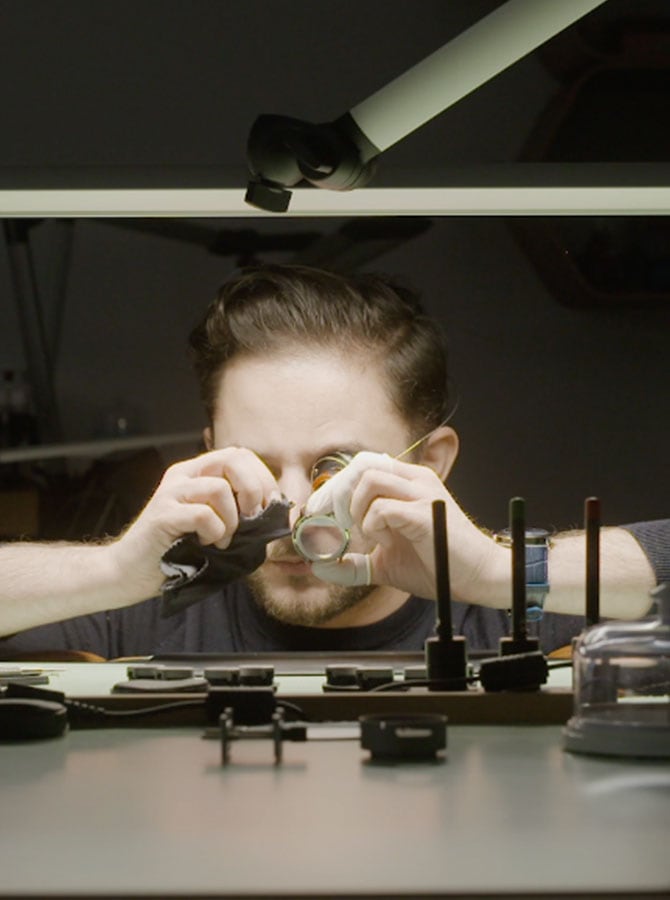
Romain Jamault, a teacher at SupMicroTech, and Antonin, a student and president of the watchmaking association MuChrono, open the doors to this world of enthusiasts by revealing the ancestral link between design and technology.
A bit of history
“MuChrono is an association whose goal is to democratize watchmaking for people of all levels of knowledge” Antonin tells us. From factory visits to specialized trade shows, through practical workshops and the creation of mechanical models, students are literally immersed in the inner workings of the watchmaking world. This is a symbolic connection for this prestigious school, founded at the beginning of the last century, as Romain, who joined the school over a decade ago, explains: “Initially, SupMicrotech built its programs around the watchmaking needs of the region. In the 1970s, with the arrival of quartz, it had to adapt and become multidisciplinary. Today, we train engineers capable of working in watchmaking, technical industries, food processing, medical, defense, automotive, and aerospace sectors… ” The common thread: environments that demand, above all, high standards and an unparalleled attention to detail.
The integration of design in microtechnology
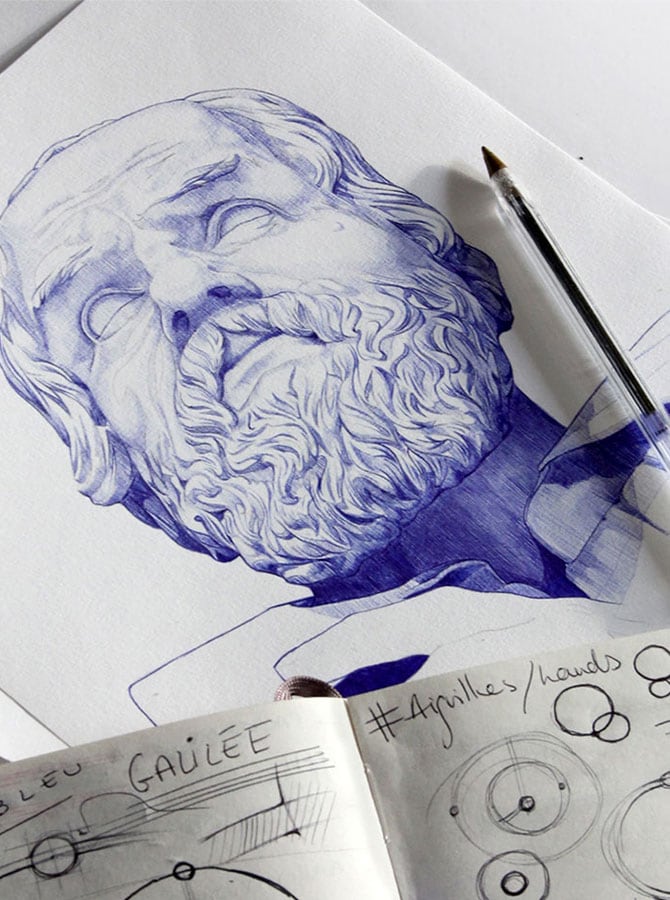
A true dialogue takes place with design. “The school is certainly specialized in the technical aspect today, but the goal is also to show students that there can be beauty in an object,” continues Romain, “we used to have a Microtechnology and Design program that aimed to create a real bridge between the two worlds. It’s difficult because many designers have an artistic approach, whereas industry demands precision and constraints. But this tension is precisely the source of innovation.”
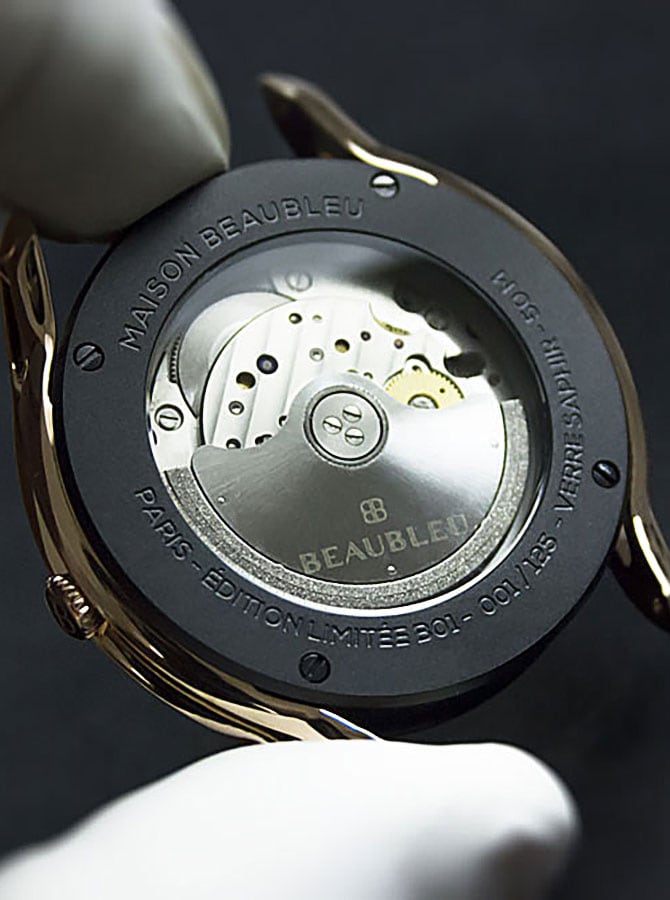
At Beaubleu, this conviction is shared: design is not simply an aesthetic envelope. Where engineering structures, design gives meaning. Both advance together, driven by the same exacting attention to detail.
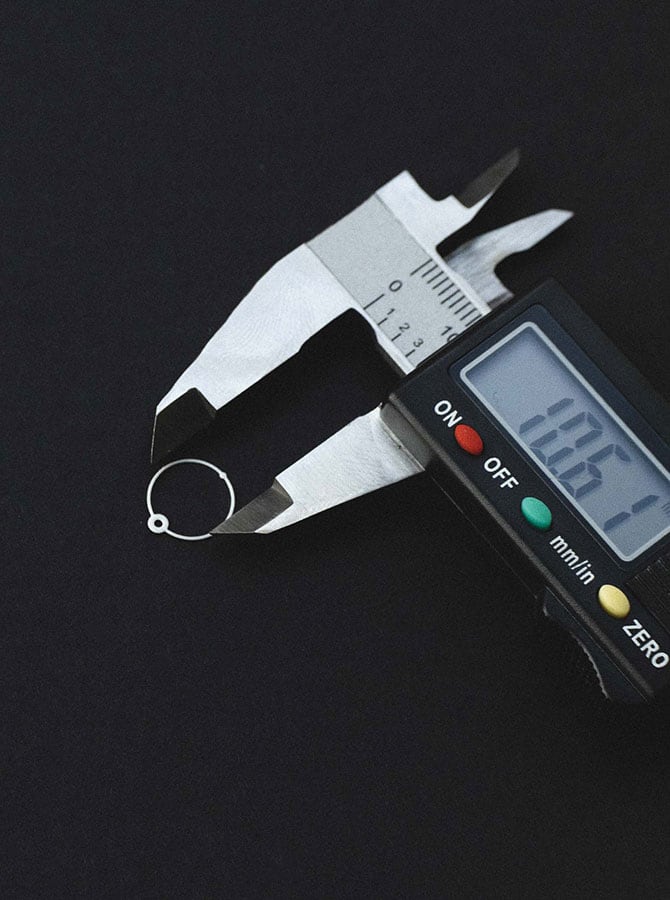
It is precisely at this moment that the true dialogue between these two disciplines takes place. For Antonin, this element of reflection within each project is essential: “It’s this idea of design that appeals to me and drives me, the idea of seeing the product that a team or I have imagined come to life.” For him, designing a watch is not simply about assembling parts: it’s a way of giving life to an idea. Through mechanical design, he learns that aesthetics cannot be decreed: they emerge from reasoning, from the precision of proportions, from the durability of the craftsmanship. “There are a huge number of calculations beforehand, which also allows us to reproduce or create new things, but above all, to ensure that these things are viable in the long term” he concludes.
Engineering at the service of design
Beyond design, then, watchmaking revolves around multiple technical factors. The idea isn't just to create a product, but also to ensure its longevity while fulfilling its primary functions. So, what constitutes a well-designed watch? Romain smiles: “That's the question… For me, it's a watch where every element stems from reasoning, not a repetition of what we already know how to do. It's a watch that retains its primary function (telling the time) but with modern solutions justified by the calculations Antonin just mentioned, by the choice of materials…”. It's a watch that evolves with the times! For Antonin, the approach is a bit more down-to-earth: the watch must adhere to the specifications, fulfill its primary function, while also incorporating the concept of durability. A well-designed watch, therefore, is one that encompasses both functionality and durability, with a touch of modernity and innovation.
Romain perfectly illustrates this idea of engineering serving design by sharing a concrete example: when a constraint imposed by a designer required a technical rethink of the project.“ We have indeed already encountered this situation. I'm thinking in particular of requests for movement transmissions: traditionally, watch movements use gears, and we were challenged to explore other types of transmissions - which are currently being developed to power watch movements. This is truly the main strength of our students: their ability to innovate in this specific field, because they are not trained solely in watchmaking. They draw inspiration from ideas and concepts used in other sectors, completely unrelated to basic watchmaking, and adapt and apply them to design a watch.” Microtechnology thus reflects its inherent capacity for reflection and inspiration, an essential trait for innovation.
Creating the watch of tomorrow
Innovations are emerging everywhere: in the rhythm of a watch, in miniaturization, materials, and various technologies (mechanical, electronic, etc.). For Romain, the watch of tomorrow remains to be created, and the future of watchmaking lies in a form of hybridization: "Today we have watches that display the time in circles, squares, straight lines, curves… We can do it all! We see so many different and extremely aesthetically pleasing things. On one hand, there are the enthusiasts of mechanical watchmaking, and then all the others who run every morning, monitor their sleep… And I can't imagine that there isn't a world of difference between the two. What's missing, in my opinion, is mixing these technologies - which is my personal definition of the word microtechnology! - but it's the designer who has this complete vision to bring about a true innovation."
Antonin, for his part, imagines a plurality of objects, focusing not on ONE watch but MULTIPLE watches: mechanisms with fewer gears, new systems, fluids… For him too, the watch of tomorrow is reinventing itself, and the different artistic visions brought by designers are essential: the vision of beauty is unique, personal, different for everyone.
The final word
The link between engineering and design is a perfect symbiosis in the creation of a watch. Together, they allow for better design, better assembly, and better wear thanks to a shared vision: precision, attention to detail, and mastery of time. The objective is clear: to design durable timepieces to accompany every moment of daily life.