



Leather watch: understanding and maintaining the natural patina of leather
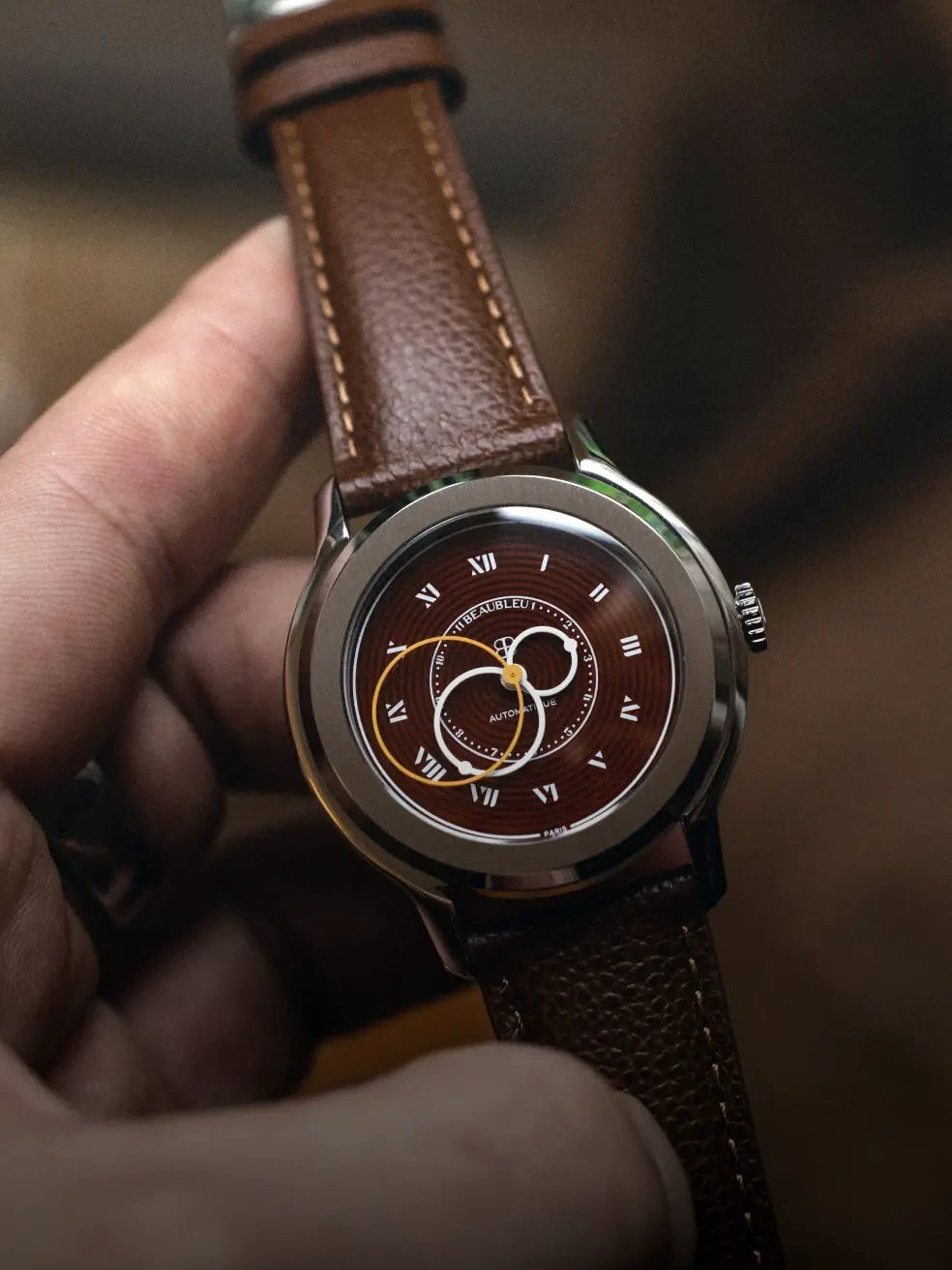
A leather strap never remains quite the same. Over time, its color evolves, its surface shows marks, and its material softens. These traces are not necessarily signs of wear; they also tell the story of the watch.
This is what gives a leather watch its character. Rather than trying to preserve its new appearance forever, it is about embracing a material that evolves, develops a patina, and gradually becomes more personal.
Key Takeaways
- A leather watch develops a patina over time, which is not synonymous with wear: the quality of the leather, its construction, and its finishing play a decisive role in its ability to age well.
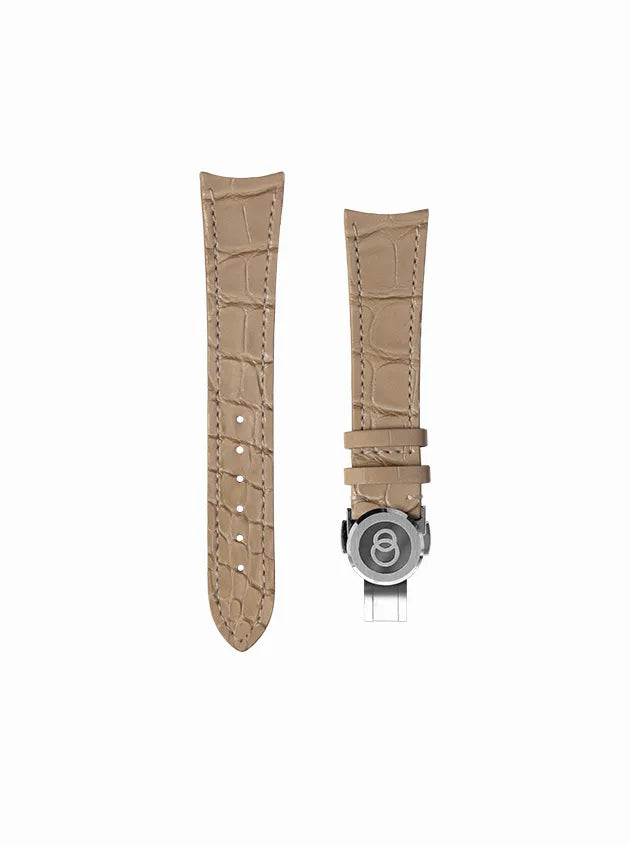
- The deployment clasp reduces stress on the leather and eliminates the most frequent breaking point.
- Three steps to make a watch strap last: nourish, air out, and alternate.
Why a leather watch develops a patina instead of wearing out
Leather is a material that evolves over time. In contact with the skin, light, and daily friction, its color changes, its surface develops marks, and its texture gradually becomes more supple. This is what is known as a patina.
This evolution does not necessarily mean the strap is deteriorating. On the contrary, when it is of good quality and properly maintained, leather can maintain its durability while developing a unique appearance. This is the very uniqueness of leather.
Maintaining a leather watch: three steps that make all the difference
- Nourish the leather two to three times a year with a suitable colorless cream, in a thin layer, to compensate for the natural loss of oils.
- Let the strap breathe for twenty-four hours after prolonged wear, as perspiration remains the primary factor in fiber degradation.
- Alternate between two straps, which distributes the stress on the material.
These simple steps help to preserve the leather and extend the lifespan of the strap. By taking care of the material, letting it breathe, and alternating straps, you limit daily stress and naturally support its evolution over time.
What to look for before buying a leather watch
Choosing a leather watch goes beyond just the color or appearance of the strap. If you want to keep it for a long time, there are certain details worth checking before making a purchase.
The leather is obviously the first. Its type, thickness, quality, and finish will all influence how it ages. A beautiful leather is not necessarily one that will remain pristine over the years. It is also one that knows how to develop a patina while retaining its suppleness and structure.
Another point to verify is how the strap can be changed. A strap is subject to friction, perspiration, and daily handling. It will therefore naturally wear out eventually. Being able to replace it easily, without tools, allows you to keep your watch and simply change the strap when needed.