


Men's Steel Bracelet Watch: an Architectural Interpretation of Design
Steel has long been presented as the reasonable choice, the mid-range material, the practical solution before being an aesthetic one. This interpretation is inaccurate. When examining a men's steel wristwatch, one discovers an object of rare formal coherence, where every surface, every link, every edge translates an intuition. Understanding this visual grammar means understanding why some timepieces fascinate enduringly.
Steel as a design material, not a compromise
The stainless steel used in watchmaking, primarily 316L and 904L, is not a neutral material. Its high density (around 8 g/cm³) gives it a presence on the wrist that lightweight alloys cannot simulate. Its rigidity allows for sharp edges, perfectly flat surfaces, and crisp transitions between surfaces, all characteristics that directly appeal to the designer.
What distinguishes steel from any other metal on a men's watch bracelet in watchmaking is its ability to accommodate two radically opposite visual languages.
Brushed or polished: two antagonistic aesthetic choices
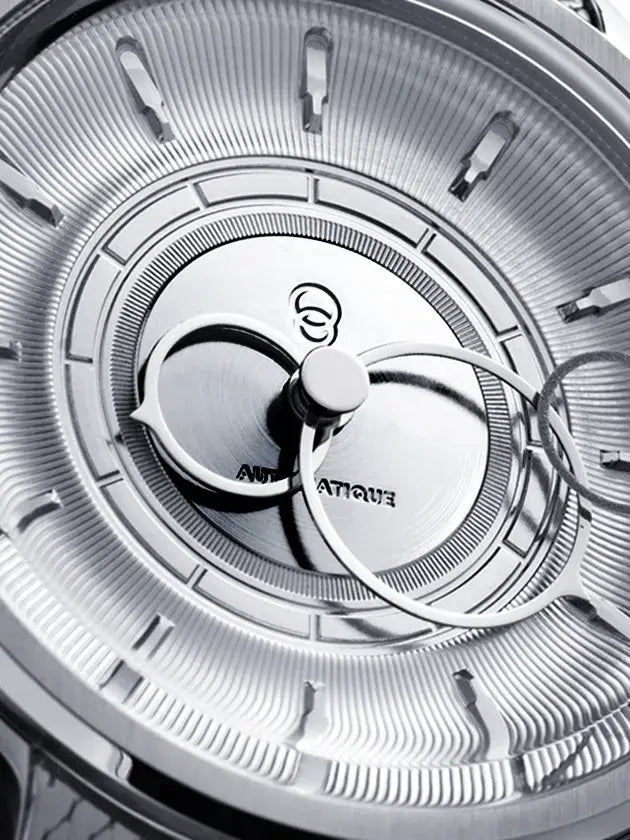
The brushed finish mattes the surface and absorbs light. It produces a discreet, structured, almost mineral object. The polished finish, conversely, transforms steel into a mirror: every curve becomes a light source, every plane reflects the environment. In practice, the most accomplished timepieces combine both on the same case or bracelet, creating calculated contrasts that reveal the piece's geometry. This interplay of surfaces is not decorative; it is structural. It forces the eye to read the watch rather than simply see it.
The bracelet as an architectural extension of the case
The steel bracelet of a men's watch is not an accessory chosen after the case. It is a formal extension of the entire piece, and its design determines the harmony or dissonance of the final object. When the design of the links echoes the angles or curves of the case, it is called an integrated bracelet: the watch then forms a continuous whole, with no visual break between the hand and the wrist.
Proportion plays a decisive role here. A bracelet that is too narrow on a 42 mm case produces an undesirable impression of fragility. A bracelet that is too wide overpowers the watch and erases its own geometry. Professional watchmakers speak of "lug width," a technical parameter that is primarily an aesthetic issue.
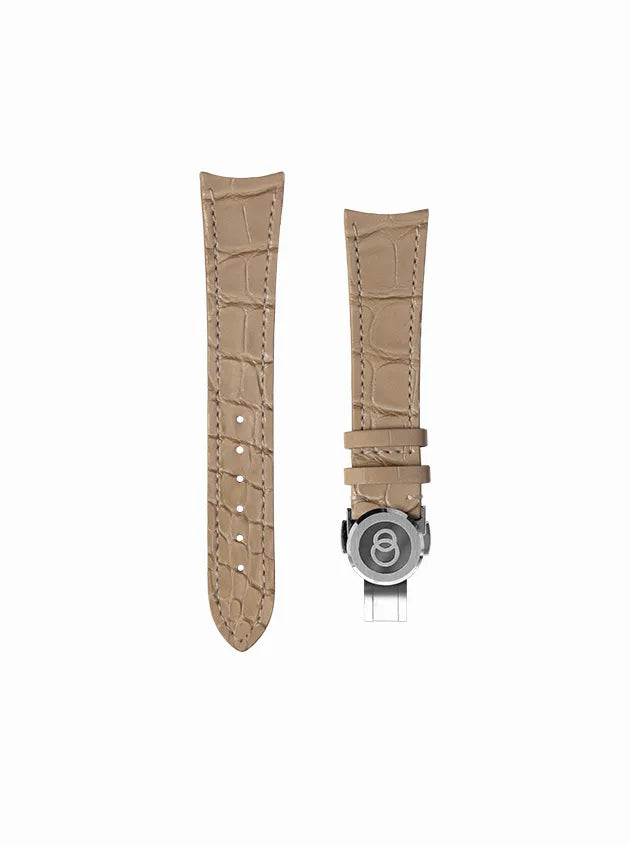
Discover the Maison Beaubleu's watch strap models
Wearing a men's steel wristwatch, a clear design choice
The weight of steel on the wrist is not a constraint: it is a presence. Approximately 100 to 150 grams depending on the caliber and bracelet, a mass that anchors the timepiece in reality and reminds with every arm movement that one is wearing a thoughtfully designed object. This sensation is irreplaceable and for many is a sine qua non condition for choosing a watch.
Steel also has a relationship with time that leather does not. It does not age, it reveals itself. The micro-scratches that appear after a few months of use on brushed surfaces do not degrade the watch; they personalize it. The object takes on the memory of its wearer without ever losing its structure.
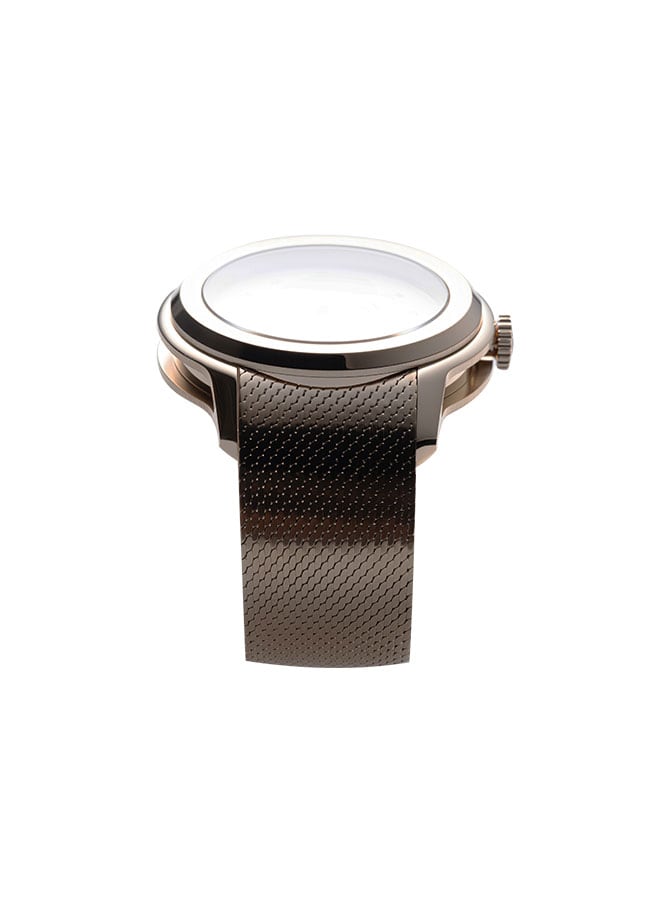
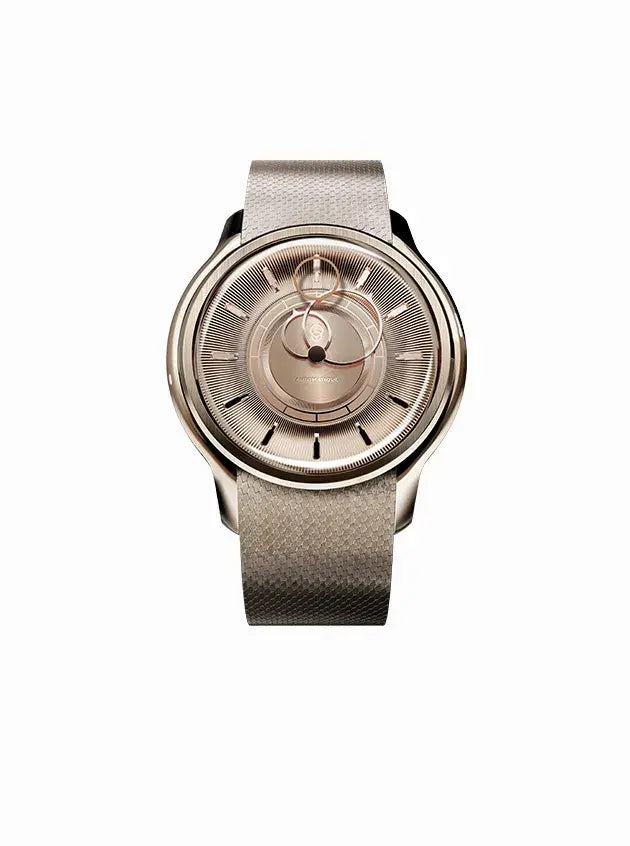
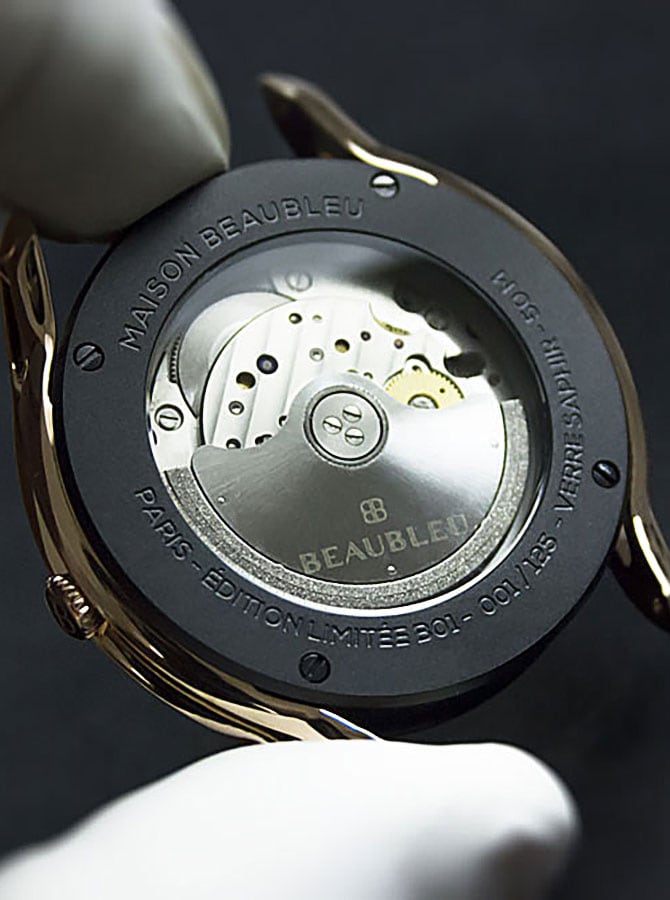
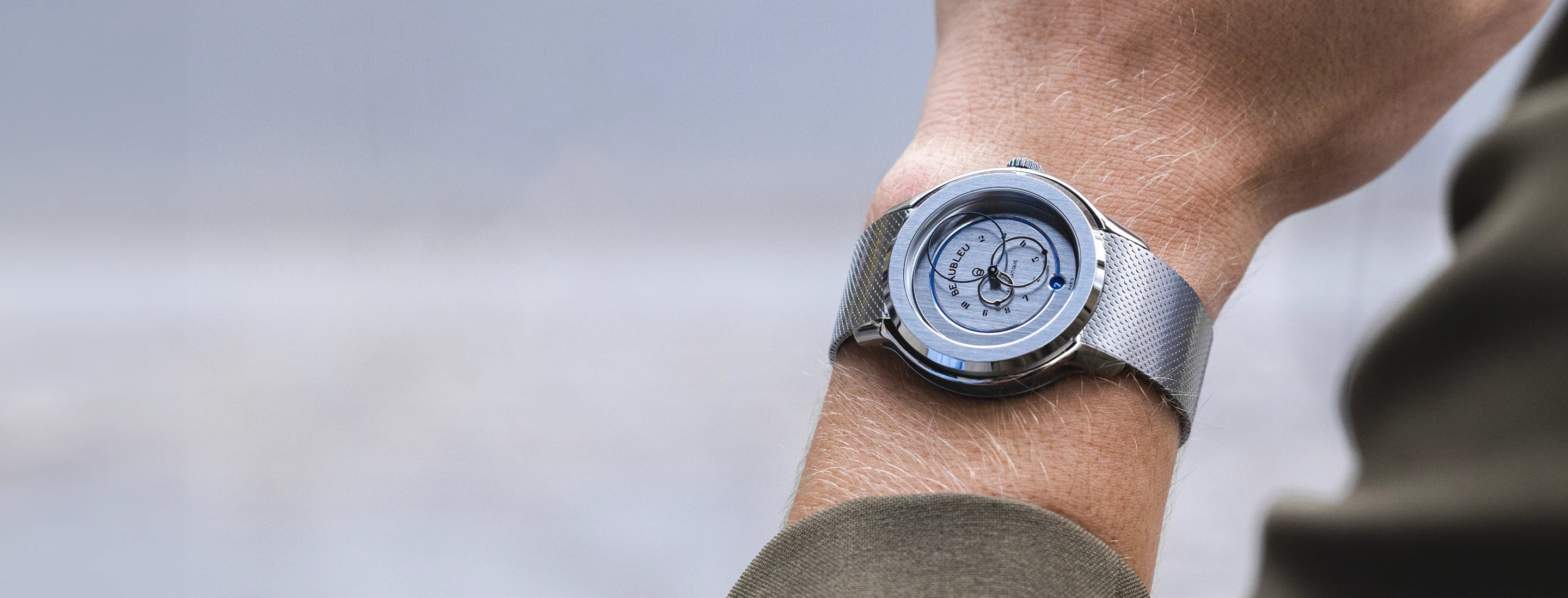
Ultimately, choosing a watch with a men's steel bracelet means adopting an aesthetic that does not need to justify itself by effect or trend. What the Braided Steel mesh from Maison Beaubleu embodies is precisely that: designed in 2021 in the Parisian studio, it abandons the logic of the classic link to offer an articulated steel blade, a true metallic skin that embraces the wrist with an adjustable, tool-free notched system. Semi-integrated, it extends the silhouette of the case with a formal continuity that attached bracelets cannot achieve.