


La Pièce - The Dials
Paris - May 28, 2026
Behind the scenes at the Beaubleu Workshops are being revealed through the Production Journey. A series of articles created to explain the manufacturing stages of Beaubleu watches and the challenges they pose.
The industrial adventure begins with these famous new dials coming to life in Paris's oldest mint, through a revisited and innovative design.
The idea was to use these techniques as a new aesthetic language where each know-how would be challenged to its maximum. For example, usually, the height of a relief is defined by the total thickness of the piece; however, by combining with other techniques from medal making, we were able to push the limits of material recovery to obtain maximum depth.

1,200 years of expertise
The dials, produced in collaboration with the Monnaie de Paris, are part of a continuous expertise that dates back more than a thousand years. Founded in 864, the institution has developed and passed on solid expertise in engraving and coin striking.
These skills, historically used for making coins and medals, are now applied to watch dials. They allow for a level of definition and depth difficult to achieve with conventional machining or stamping processes.
The project consists of adapting these techniques to a new use, pushing their capabilities to their limits. Where metal thickness usually imposes strict constraints on the height of reliefs, processes derived from the monetary world allow these standards to be exceeded.
By combining these approaches, it becomes possible to work with more pronounced and expressive volumes. Each dial thus results from the encounter between engraving and striking, in a context where traditional methods are repurposed to meet contemporary watchmaking requirements.
Tooling
It all begins when the tooling takes shape. A foundational, precise stage where nothing is left to chance. The die—this striking tool that will structure the dial's relief—is machined from specially treated and polished steel. It must withstand significant pressures while maintaining an impeccable ability to render detail.
The initial shaping is entrusted to a high-precision engraving laser. It defines the main volumes, establishes the initial masses, and sets the structure of the relief with micrometre accuracy. This is followed by a slower, more constant adjustment process. The mold is built in direct collaboration with the chief engraver. Adjustments are made, corrections applied, and refinements added. The original design confronts its three-dimensional translation until it finds its balance.
It takes approximately eight months to finalize all the dies. This is a long and necessary period during which every detail is observed, corrected, and sometimes reworked. Thirty-six prototypes are created throughout the development, each serving as a milestone to validate the material effects and surface interactions.
Ultimately, this process relies on a constant tension between technical precision and aesthetic demands. And at the heart of this chain, one thing remains unchanged: the artisan's hand, which remains the final arbiter of the relief and its interpretation.
Engraving
Once the technical base is in place, the finishing work begins. This is where the die truly enters a phase of precision.
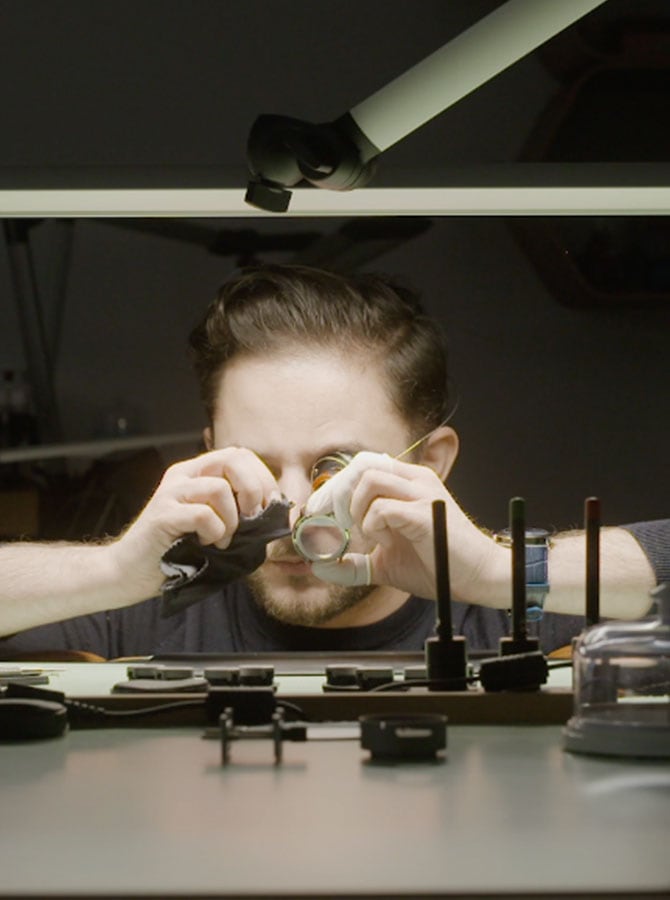
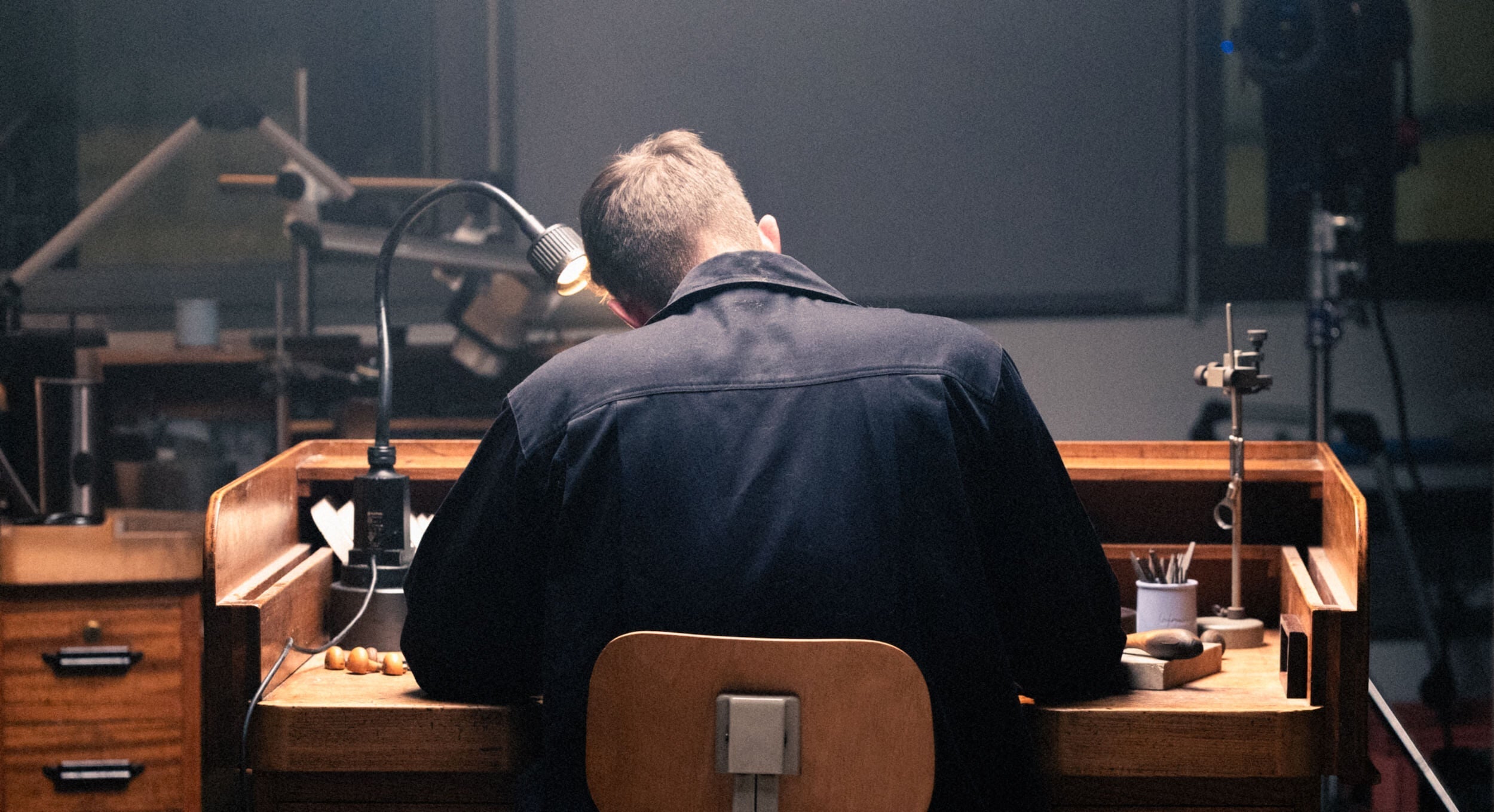
The engraver takes the tool in hand and works directly on the details of the relief. The work is done under a binocular loupe, area by area. Each contour is reworked, each surface is checked. Some parts are protected, others highlighted using hand-made stencils.
This stage is carried out by the Chief Engraver at the Monnaie de Paris. It reflects an exceptionally high level of demand, where mastery of gesture and precision constantly outweigh speed of execution. The work progresses slowly, methodically, with each adjustment gradually refining the relief until a rendering that perfectly matches the original design is achieved.
Beyond the technical aspect, this phase relies on a mastery of gesture acquired over time. It is this expertise that allows a machined base to be transformed into a finished, precise, and coherent relief that meets the House's standards.
 |
 |
Textures
Each surface of the die becomes a workspace in its own right, designed to structure textures and control plays of light. Satining, micro-beading, alternations of matte and glossy finishes: each effect is applied in a targeted manner, entirely by hand. The precise and controlled gesture constantly adapts to the reading of the relief in order to reveal the full depth of the dial.
This stage is carried out by the workshop's most experienced engraver, with over twenty years of practice. His role is to ensure the overall consistency of the finishes, while respecting the original intention of the dial.
The metal is worked progressively, with successive touches, until the desired nuances and contrasts appear. Nothing is decorative in the gratuitous sense of the term: each surface treatment has a function in the final reading of the dial.
It is this level of execution, combining experience and mastery of gesture, that allows the desired precision to be achieved in this type of production.
Polishing
To achieve the level of finish required by coin striking, a long phase of manual polishing is then undertaken. The artisan works with different types of wood—from the hardest to the softest—combined with abrasive pastes of carefully adapted grit sizes. Each tool is selected according to the treated area and the desired result.
The work progresses in successive stages, with constant monitoring of edges, volumes, and reliefs. The goal is to improve the surface condition without ever altering the die's geometry. Entirely traditional, this method remains the only one capable of preserving the extreme finesse of details while achieving the expected level of finish.
At the end of this stage, the die reaches its final state: a stabilized surface, ready for the striking phase and the reproduction of the dial.
 |
 |
Striking
When the die is fully finalized, it is installed on the press in the Grand Monnayage hall of the Monnaie de Paris.
Striking is carried out under extreme pressure, which can reach up to 5,000 tons per square centimeter. The brass blank is then forced to deform and faithfully conform to the relief of the die. The critical point of the process lies in controlling the material flow. The metal must fill each cavity of the relief without breaking, to ensure a clear and homogeneous rendering of the dial.
The thickness of the piece changes significantly during striking, going from approximately 1 mm to 0.35 mm. After each pass, annealing is performed to stabilize the metal and preserve the quality of the reliefs. At this level of demand, the tolerance is extremely low, on the order of a micron. The slightest deviation can affect the final definition of the motif.
It is this combination of controlled pressure, metal management, and execution precision that allows for a dial perfectly faithful to the original die.

Annealing
The design of Beaubleu dials requires moving beyond the classic single-pass striking method. Deeper reliefs and complex volumes necessitate work in several cycles.
Each cycle alternates between striking and annealing. Annealing involves heating the blank to a high temperature to restore its ductility after the deformation stresses experienced during striking. The metal thus regains its ability to deform without rupture or embrittlement. This alternation allows the material to be progressively taken up and brought back up to the finest details of the die. With each pass, the motif gains in precision: the metal conforms ever more faithfully to the engraving, until all the reliefs and textures of the dial are accurately reproduced.
It is this controlled repetition of operations that allows the level of definition expected on this type of dial to be achieved.
This stage allows for no errors, because after heating, the dial must be repositioned in the press with absolute precision: the slightest misalignment, even a hundredth of a degree from its axis, would compromise the perfection of the strike.
Treatment
Once the striking is complete, each dial is handled with extreme delicacy, transported to an environment where temperature and humidity are meticulously controlled. This care allows the metal to stabilize, retain its shape, and prevent any premature oxidation. Inspection of the piece before treatment is also essential: the slightest defect would be accentuated by the finishing operations.
Then comes the ritual of chemical baths. First, thorough degreasing and cleaning remove all residual traces, preparing the surface for the subsequent stages.
With each immersion, the piece seems to transform, guided by the artisans' expertise, who ensure that technique becomes an extension of human gesture, serving the elegance and durability of the dial.
Colors and Finishes
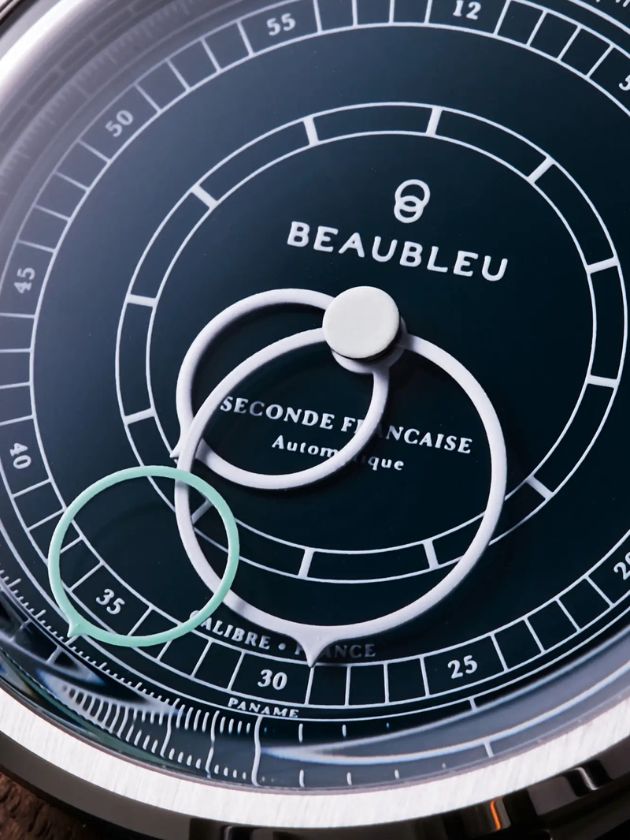
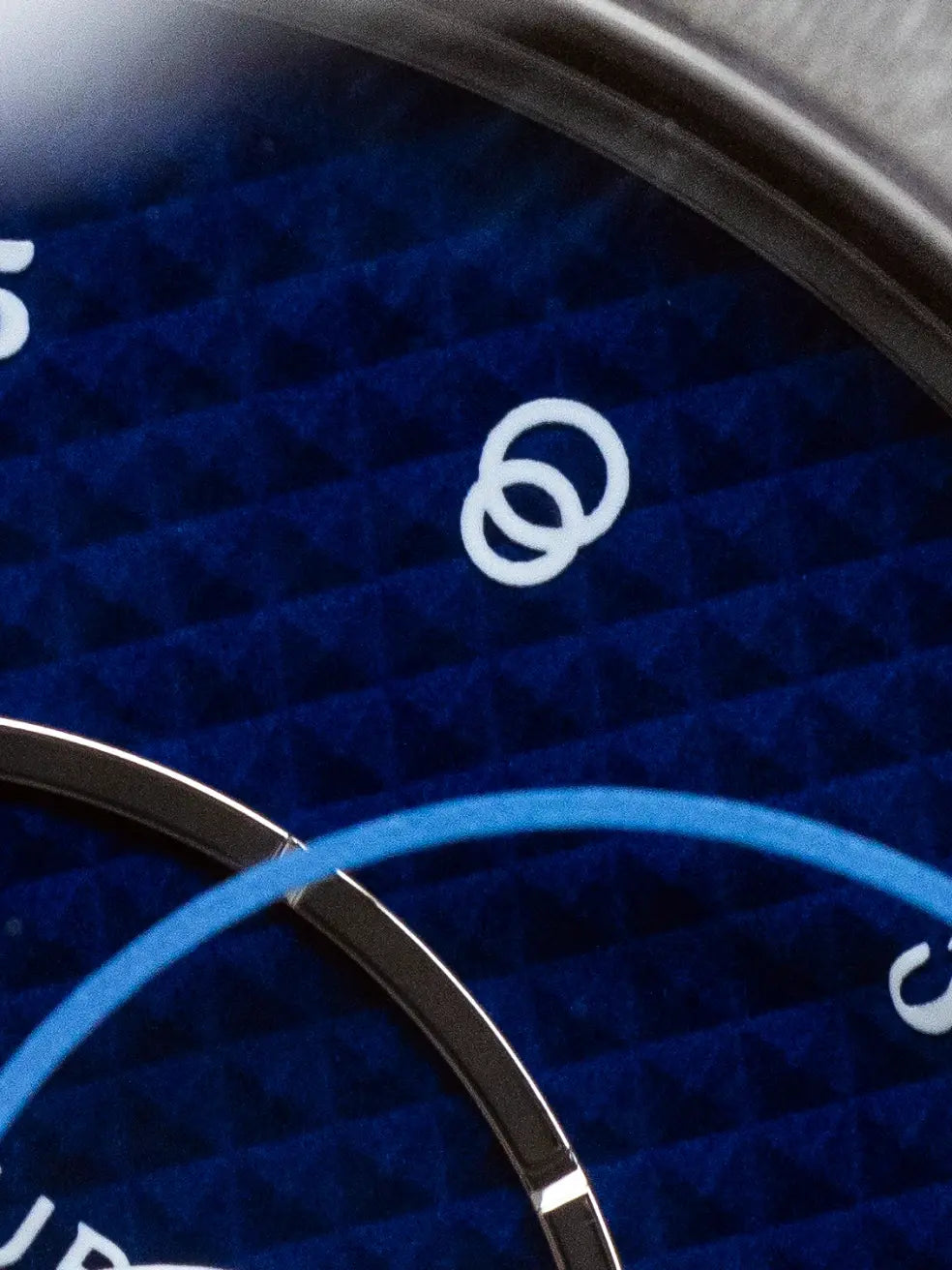
The treatment of the two dials relies on very different approaches. For dial n°1, the color is obtained by spray application, followed by oven baking to permanently harden the paint. The challenge lies in finding the perfect balance between the desired shade, the slightly grainy matte texture, and the preservation of the relief from the striking, which must never be obstructed by the material. Each nuance thus requires two to three trials to achieve the desired final rendering. The indices, logo, and minute track are then produced by pad printing, with a subtle powdery and iridescent effect that delicately catches the light.
Dial n°2, on the other hand, uses an electroplating process: a chemical treatment through successive baths that deposits an extremely thin layer of color on the metal surface, like a plating. This technique allows for a particularly precise, homogeneous, and faithful finish to the dial's reliefs.
The Final Touches
Before proceeding with the final dressing operations, the dial feet are soldered to the back of the piece. These thin metal rods, as discreet as they are essential, ensure perfect alignment with the watch movement and serve as anchoring points during the various finishing stages: painting, pad printing, or index placement.
Each dial thus appears as the culmination of a meticulously crafted process, where contemporary technologies, artisanal gestures, and ancestral monetary savoir-faire constantly intertwine. What began as a simple brass blank gradually becomes a watch component of rare complexity, a subtle balance between technical mastery, aesthetic sense, and human intervention.
These two dials were developed for two distinct series, each exploring in its own way the relationship between light, material, and plays of reflection on the dial's surface. Behind their apparent simplicity lies a long development process: each model required between two and three prototypes to precisely achieve the desired shade, texture, and luminous rendering. In total, 27 prototypes were created during development. From the first manufacturing stage to the final finishes, the production of a dial takes approximately 65 days.
Dial n°1
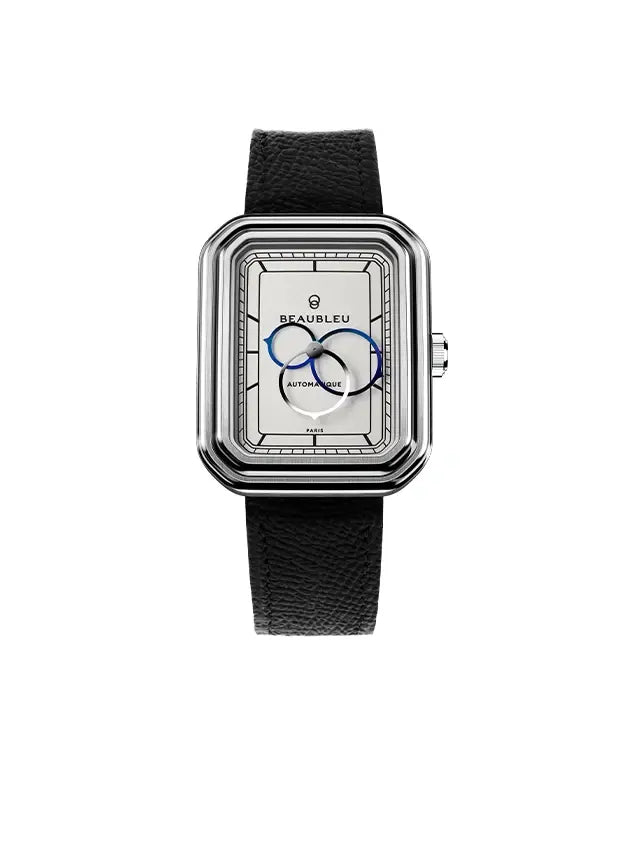
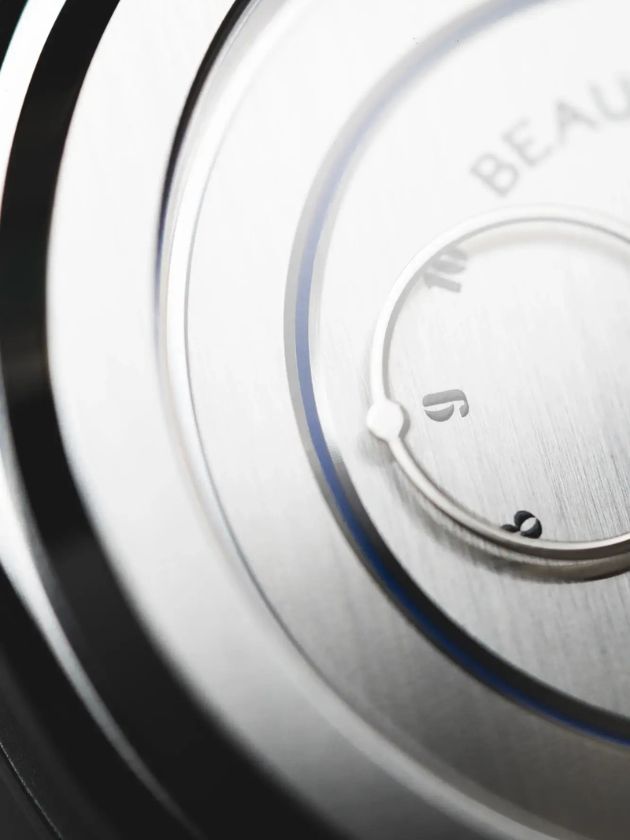
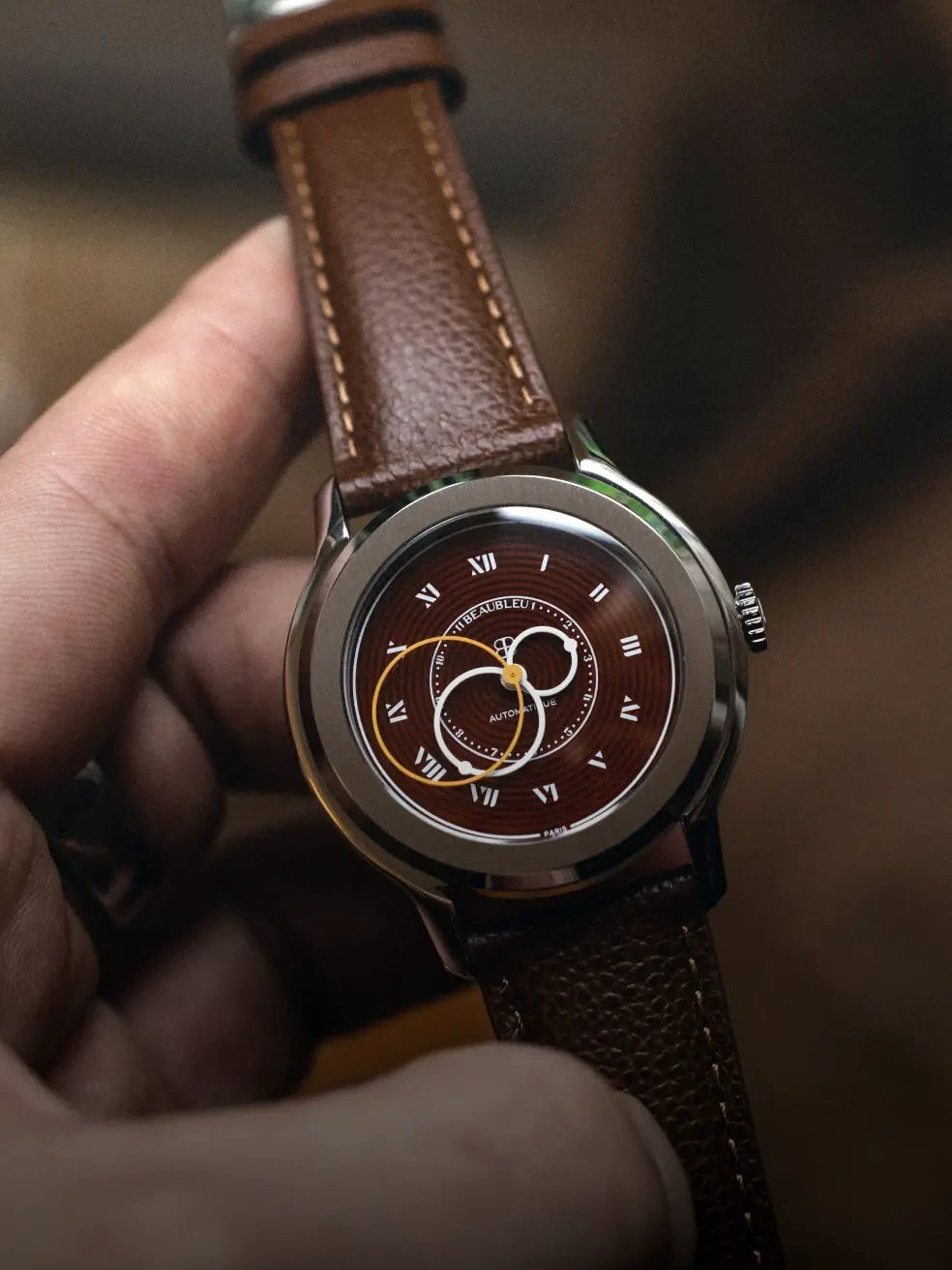
Conceived as a sculpted block of layered material, La Pièce No.1 unfolds through a composition of non concentric circles, evoking the path of light from sunrise to sunset. Every detail of the dial evokes a subtle dance between relief and depth, where textures and shades intertwine to create a unique dialogue.
This series, available in six finishes, offers a refined color palette: Champagne, Moka, Empire Blue, Graphite, Burgundy and Olive Green.

Dial n°2
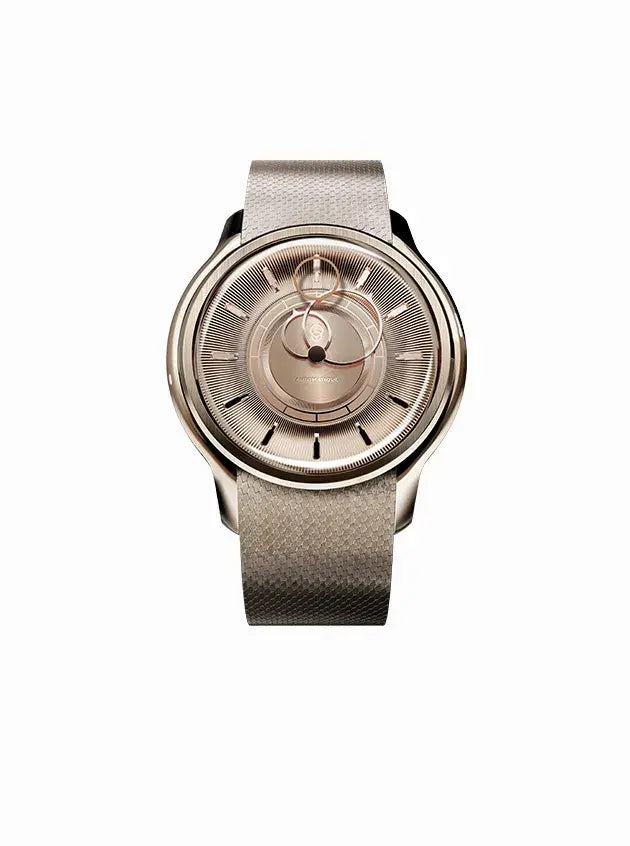
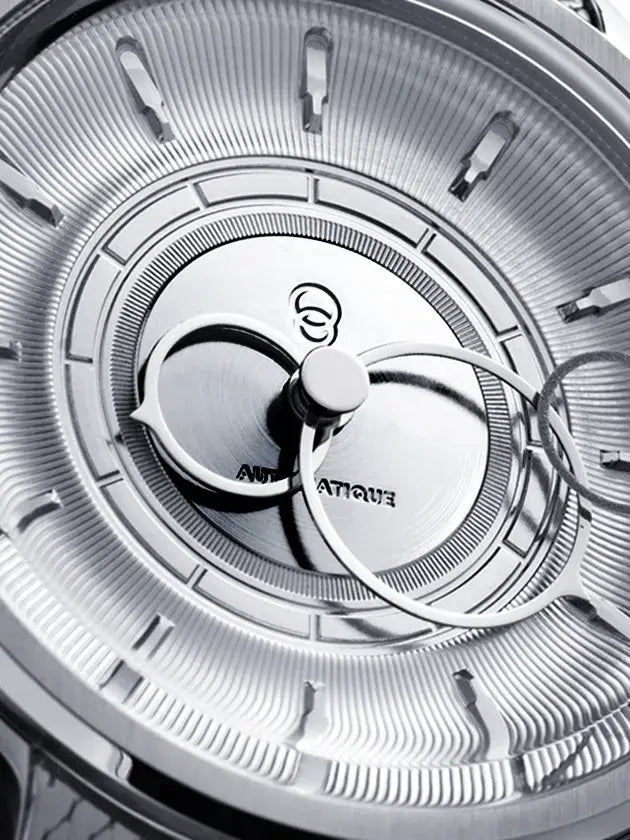
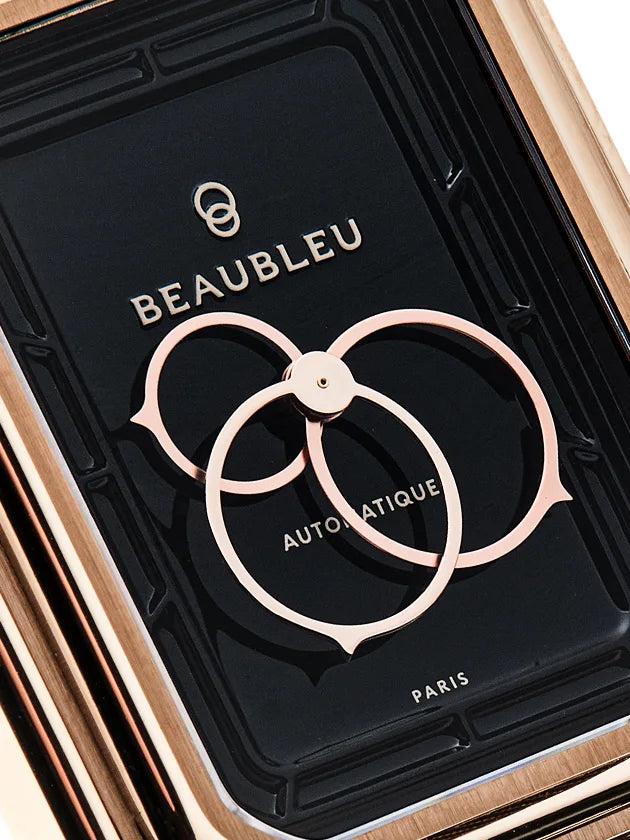
As if carved from a single block of steel, La Pièce n°2 reveals a rare feat to the trained eye: polished inner surfaces and hour markers obtained directly from the mass. This tour de force, never before achieved in watchmaking for a monobloc dial, transforms every detail into a demonstration of mastery and precision, where the material becomes both a tool and an expression of unique expertise.
This series is available in three finishes: Silver, Rose Gold and Black.

In the next Production journey, we will explore the manufacturing of cases and hands, from their design to their finishing.