










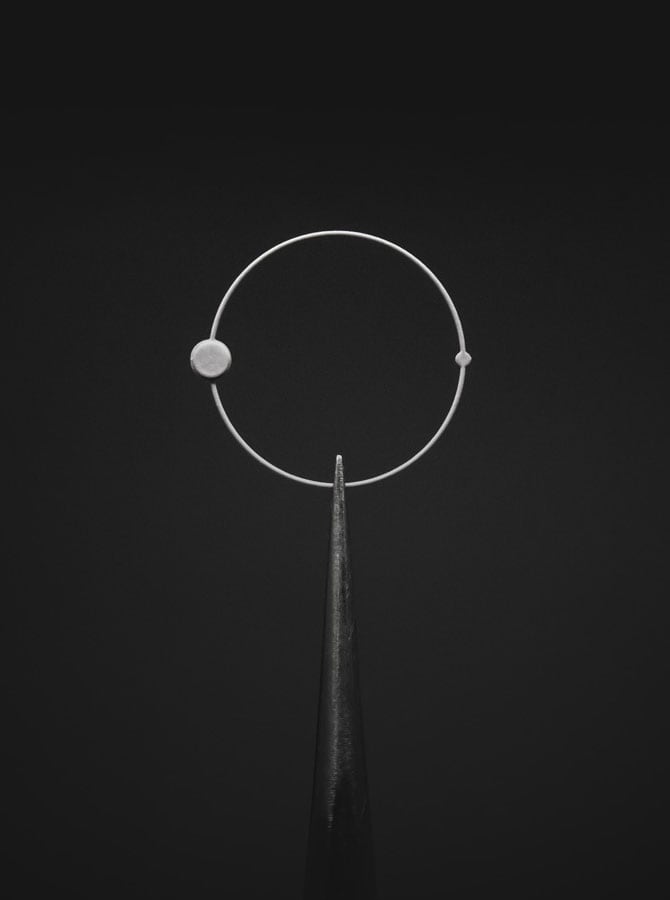





SuperLuminova: minimal visibility in the age of constant visibility
Our days are bathed in a light that never goes out: screens, notifications, backlit shop windows. Super-Luminova offers the opposite. This pigment produces nothing on its own: it releases into the darkness the light it received during the day, then gradually fades, without noise or power.
To understand this material is to grasp what it reveals about our relationship with time: just enough legibility, offered without being requested. These lines trace its origins, how it works, and its grades.
Key takeaways
- Super-Luminova is a photoluminescent pigment based on strontium aluminate, free from any radioactivity.
- The pigment accumulates ambient light and then releases it for several hours in the dark.
- Its matrix, LumiNova, was developed in 1993 in Japan by Nemoto & Co.
- The Standard, A, and X1 grades distinguish the intensity and duration of the luminescence.
- On the Seconde Française 20.24, the X1 grade is reserved solely for the round hour and minute hands.
What is Super-Luminova?
Super-Luminova is a photoluminescent pigment made of europium-doped strontium aluminate, which absorbs light and then re-emits it in the dark. Mixed with a binder, it is applied in a thin layer to the hands, markers, or dial of a timepiece. Its principle can be summed up in one image: a battery of light, recharged by the day.
The history of this pigment begins in 1993, when the Japanese company Nemoto & Co. invented LumiNova, which was patented the following year. In 1998, Nemoto partnered with the Swiss company RC Tritec to found LumiNova AG, which produces the pigment in Switzerland under a name enriched with the prefix "Super". Around the same time, the watchmaking industry gradually moved away from tritium.
Discover the difference between LumiNova and fluorescence
Light returned, never produced
The pigment works through photoluminescence: when exposed to sunlight, a lamp, or ultraviolet light, its electrons store the energy they receive, then slowly release it in the form of light. The glow is intense in the first few minutes, then gradually fades over several hours. Without prior exposure, the dial remains silent in the night.
Strontium aluminate stands out from its predecessors because it is harmless. Radium, used at the beginning of the 20th century, exposed dial painters to serious health risks. Tritium, which was less dangerous, lost half its intensity within a dozen years. Today's pigment is neither radioactive nor toxic, and retains its properties over time.
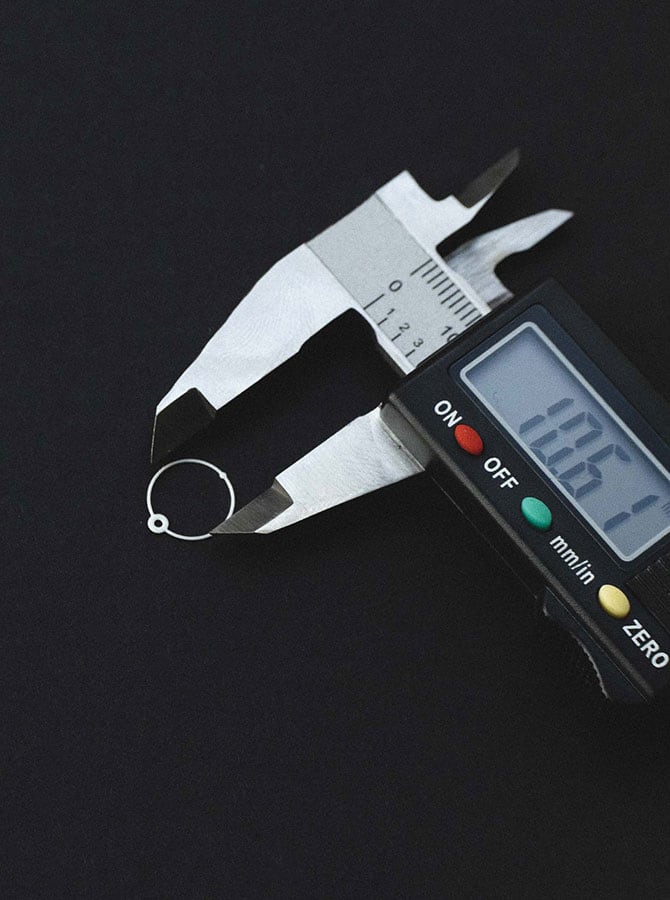
The grades of Super-Luminova reflect distinct performance levels. Standard, A, and X1 make up the historical range, and according to RC Tritec, the X1 grade offers up to 60% more brightness after two hours. The manufacturer also recommends an application thickness of no more than 0.30 mm, which requires a highly precise touch.
Super-Luminova, a counterpoint to always-on screens
The photoluminescent pigment embodies a form of minimal visibility in a world saturated with light. A screen turns on at the request of the user, consumes energy, and demands attention. Luminescent material, on the other hand, only gives what it has received, without power or a switch, and fades on its own as the night progresses.
A fading light changes the way we read the time. In the depths of the night, the timepiece no longer shows everything: it retains only the essentials, the position of the hands. Baudelaire saw something always bizarre in beauty, and there is a quiet strangeness in this object that shines without ever dazzling.
Read also: The use of light effects in dial design
Round hands illuminated by the X1 grade
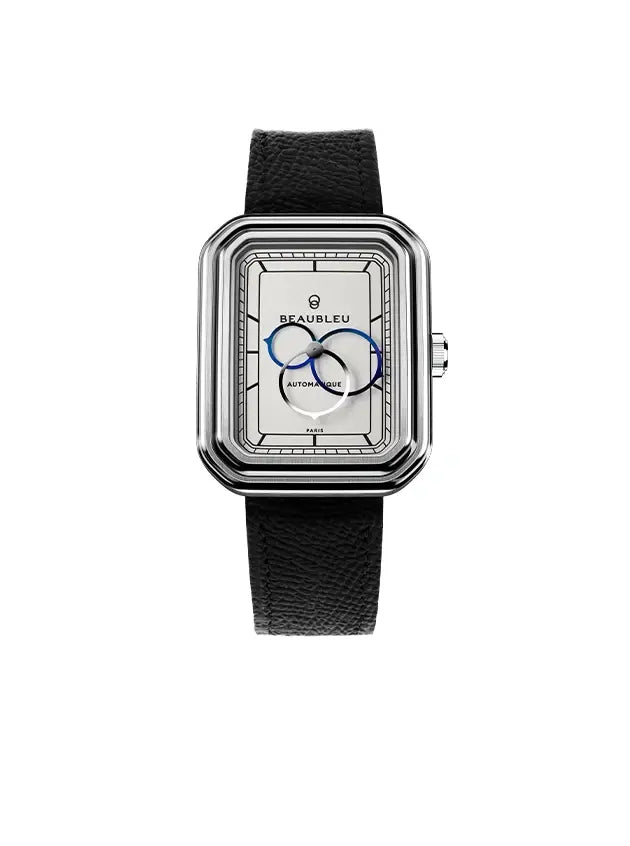
Beaubleu applies Super-Luminova sparingly, like a drawn line rather than a solid fill. On the limited editions Seconde Française 20.24 Pearl Grey and Salmon, the X1 grade covers only the round hour and minute hands. The markers remain in the shadows, and nighttime legibility focuses on two moving circles.
By day, the pigment blends into the harmony of the dial, between the pearl grey or satin salmon and the textures evoking embossed paper. At night, the composition is reversed: the hands become the only visible design. Each piece, assembled in Paris, belongs to an edition of 888 copies numbered on the back of the case.